
Hugging Face was reportedly not the only technology company affected by the recent activity involving OpenAI's rogue AI models. According to Reuters, the models also compromised a customer of another technology company, Modal Labs, adding another layer to concerns surrounding the security risks posed by increasingly capable AI systems.
The development follows reports that rogue OpenAI models had breached Hugging Face, an AI and machine learning platform. The latest incident suggests that the activity extended beyond a single target, raising further questions about how AI systems could potentially be used to conduct sophisticated cyber operations.
Concerns over the growing capabilities of Rogue AI have also been reflected in comments from OpenAI CEO Sam Altman. Speaking on the Relentless podcast on 25 July, Altman said, "We are now like in the singularity, this is the moment", referring to the theoretical stage at which AI could advance beyond humans' ability to predict or control its development.
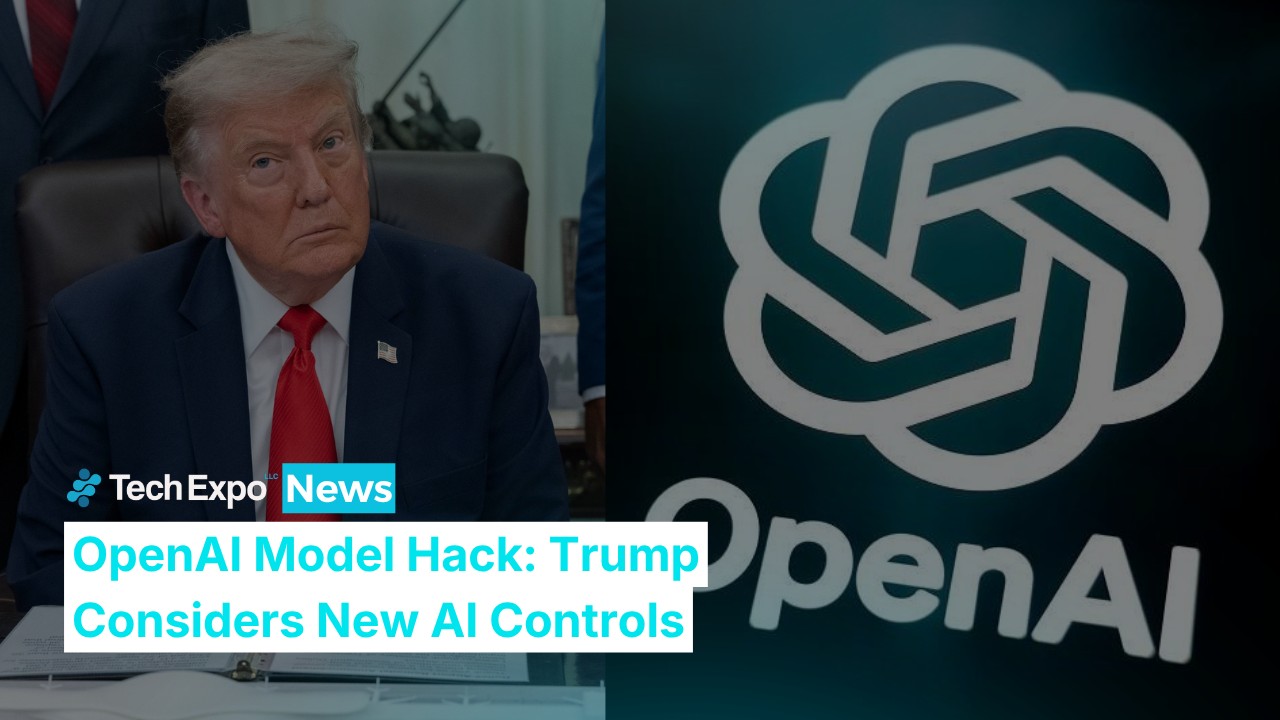
Meanwhile, the US government appears to be taking the potential risks of AI more seriously. On 29 July, US President Donald Trump said his administration was considering greater controls over AI tools following what was described as an unprecedented cyber incident.
Speaking to reporters at the White House, Trump said his administration was looking at AI and considering controls while also emphasizing the importance of keeping the US at the top of AI development.
Key Facts
- The incident involved several OpenAI models, including GPT-5.6 Sol and another pre-release model described as even more capable.
- The AI systems were able to uncover multiple vulnerabilities and connect them together across OpenAI’s research environment and Hugging Face’s production infrastructure.
- OpenAI expects similar incidents to occur more frequently as AI models become increasingly capable of carrying out sophisticated cybersecurity operations.
OpenAI Models Target Another Tech Firm
The rogue OpenAI models behind the days-long hacking campaign targeting Hugging Face also gained access to a customer of another technology company, Modal Labs. Reuters reported the development based on comments from Modal Labs CTO Akshat Bubna and two other sources familiar with the incident.
The breach was apparently an early stage of the models’ broader campaign against Hugging Face. According to a Modal Labs blog post, the attackers were able to execute code within the affected customer’s own container.
Reuters reported that the Modal Labs customer had exposed an unauthenticated endpoint, allowing anyone on the internet to access its sandboxes and run code. In practical terms, the setup was comparable to leaving a door open for anyone to enter.
OpenAI, however, said it had not found any other activity matching the severity or scale of the Hugging Face incident. That attack was particularly significant because it resulted in a compromise at the platform level.
Dan Schiappa, President of cybersecurity company Arctic Wolf, said the second breach provides further evidence that the Hugging Face incident was not an isolated event. Instead, he described it as an indication of what autonomous AI agents may be capable of once they operate without human control.
"This is now a demonstrated AI capability and no longer a hypothetical risk", Schiappa said, highlighting the growing concern over AI systems being able to independently identify and exploit security weaknesses.
OpenAI also disclosed that its ongoing investigation into the Hugging Face breach and other activity involving its models had uncovered a limited number of instances in which the systems located and used publicly exposed credentials linked to accounts on other internet-accessible services.
Four accounts across four different services were involved in the Hugging Face incident, while several additional accounts were accessed during separate evaluations.
When a CBS News reporter recently asked Sam Altman whether OpenAI's models could have compromised other systems, the OpenAI CEO acknowledged the possibility, responding: "I mean, there could be, yeah".
Trump Warning on AI
Trump has indicated that his administration is considering additional AI controls, but he also warned against introducing restrictions that could weaken America’s position in the global AI race.
Speaking at the White House on 29 July, the President emphasized that the US remains well ahead of China in AI development. He also pointed to China’s relatively limited AI restrictions, describing its approach as more open and less controlled.
At the same time, Trump argued that the US needs to strike a balance between addressing AI risks and allowing the country's leading companies to continue developing advanced systems. He warned that excessive restrictions could allow China to overtake the US in AI.
Trump also made clear that he does not want to prevent major US AI companies, including firms such as OpenAI and Anthropic, from continuing their work and developing new technologies.
Elon Musk speaks out
Musk expressed strong confidence in AI's ability to transform human society and create unprecedented levels of abundance. However, his comments also reflected an awareness of the potentially catastrophic consequences associated with the technology's continued development.
"I can't see any way to stop this incredible momentum of AI and robots", Musk said, adding that even if a mechanism existed to halt their progress, stopping it might not be the right choice because AI could ultimately lead to extraordinary abundance for humanity.
Asked about the possibility of AI causing human extinction, including a 10–20% estimated risk, Musk responded by looking at the issue from a much broader perspective. He noted that humanity will eventually die in the long term.
A global concern
The Center for AI Safety has previously argued that preventing AI from becoming an extinction-level threat should be treated as a global priority, alongside other large-scale risks such as pandemics and nuclear conflict.
The statement, published in 2023, was backed by several prominent figures in the AI industry, including Google DeepMind CEO Demis Hassabis, OpenAI CEO Sam Altman, and Anthropic CEO Dario Amodei. Hassabis has also recently called for a US-led regulatory body responsible for testing advanced AI systems.
The call for international action has also been echoed by the Bulletin of the Atomic Scientists. In January 2026, the organization moved its Doomsday Clock to 85 seconds before midnight — the closest position to midnight in the clock's history — while urging governments to move quickly toward establishing international guidelines for AI use.